
Basics
Mold in an AC unit
Air conditioning systems produce condensate, and when a drain pan, drain line or duct liner stays wet, growth can start. A contaminated system should not run.
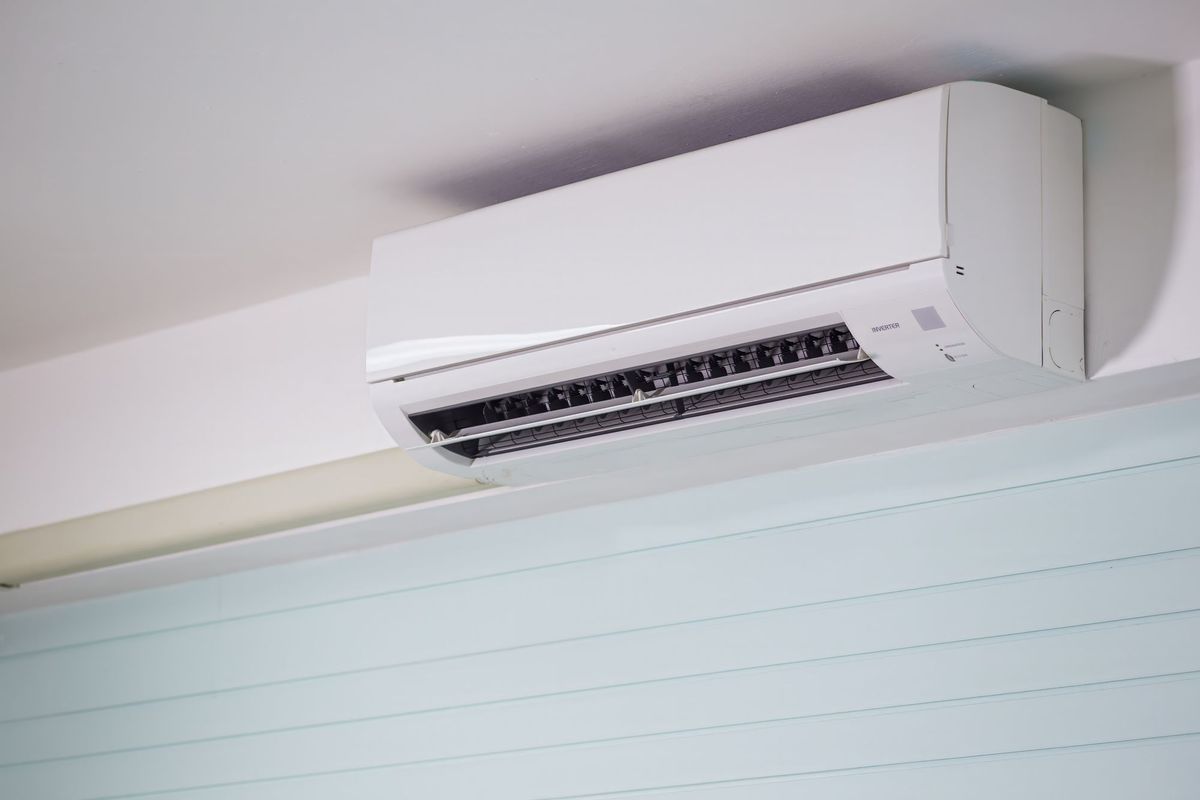
Why air handlers get damp
Air conditioning systems produce condensate at their coils. Standing water or damp materials around the system can support mold growth.
Florida health officials say to check around air handling units for standing water and to routinely inspect coils, liner surfaces, drain pans and drain lines.
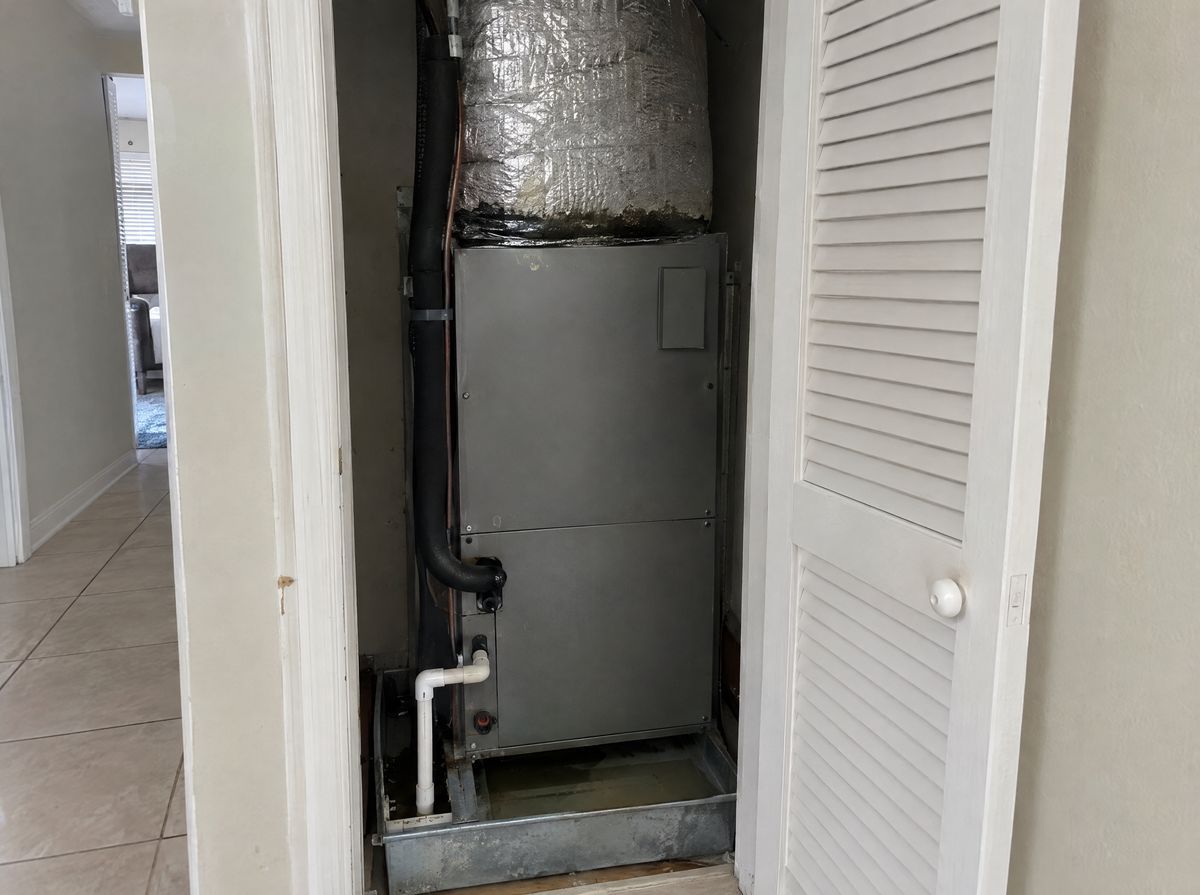
What a contaminated system looks like from the closet
The clues are usually at the air handler: standing water in the pan, a slow drain line, or a duct liner that stays damp while the system runs.
If you know or suspect the system is contaminated, turn it off and leave the work to professionals experienced with HVAC systems. Wet or moldy duct lining should be removed and replaced.
- Check around the unit for standing water, and look at coils, liner surfaces, drain pans and drain lines.
- During remediation, seal intakes and supply vents and keep negative air pressure.
- No biocide is approved for use on internally lined ductwork.
Where to look
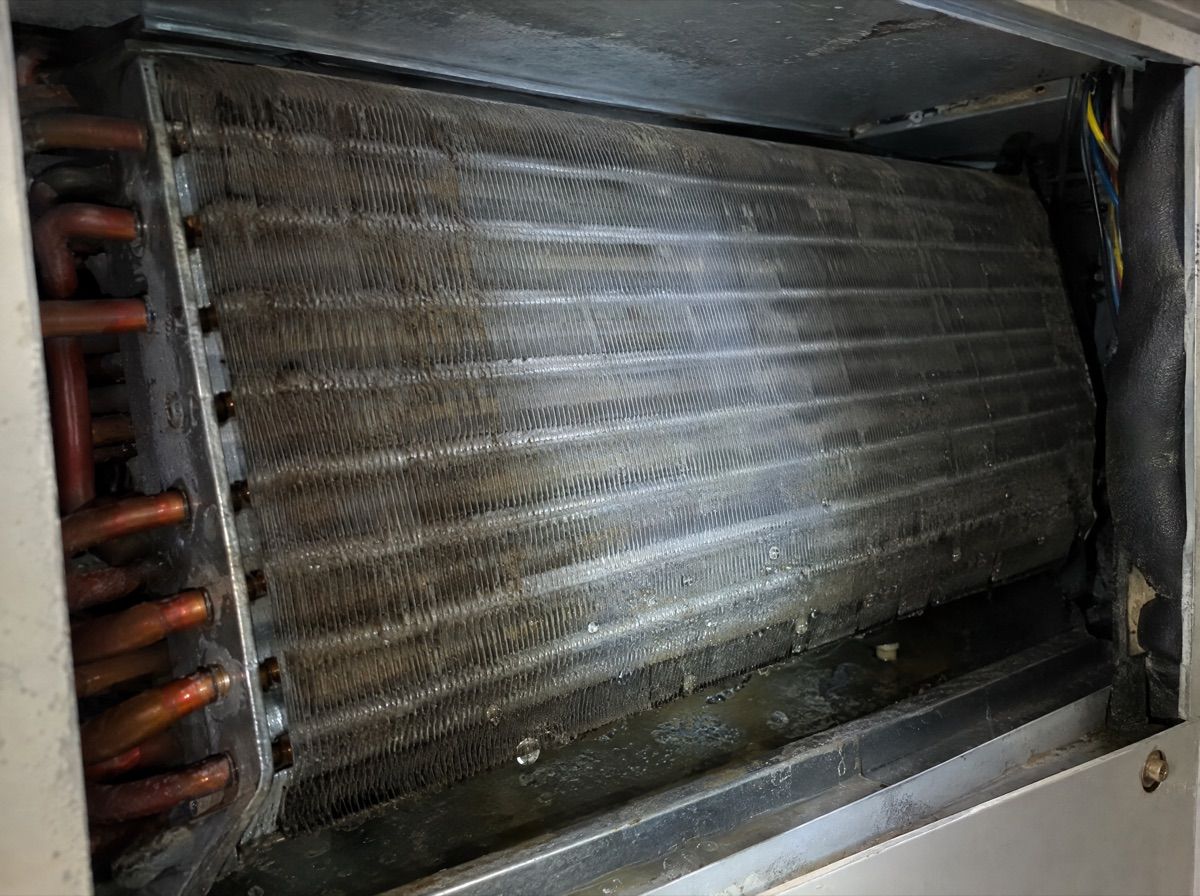
Evaporator coils
Coils stay cold and wet while the system runs.
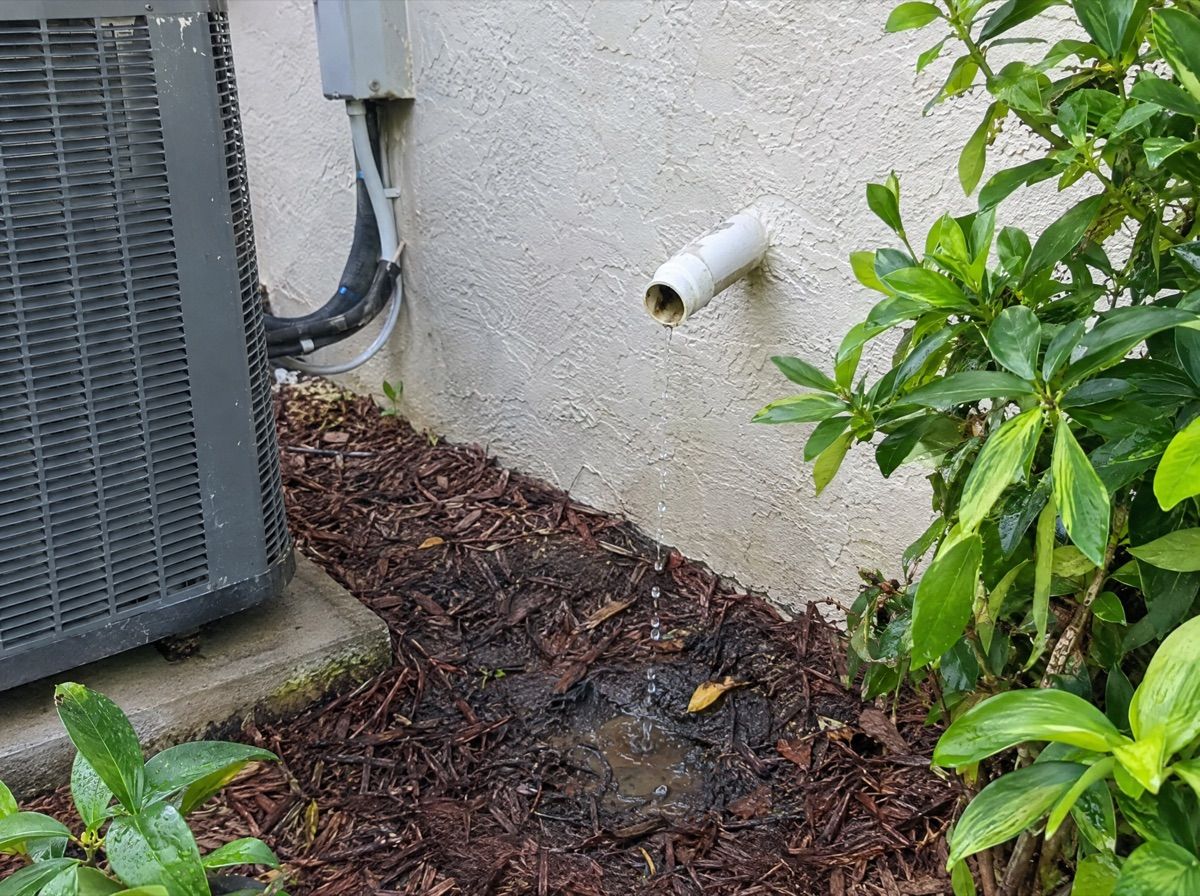
Drain pans and drain lines
Water that does not drain away stays in the pan or the line.
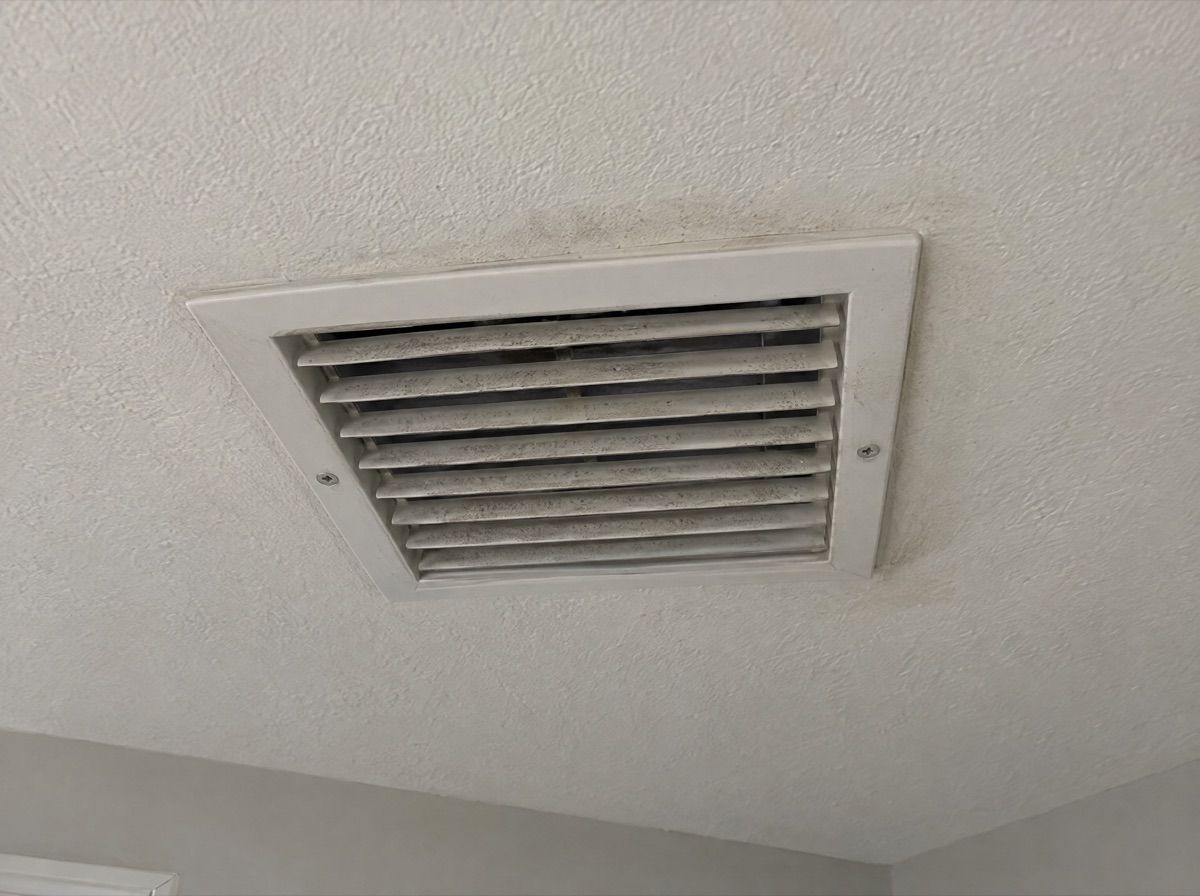
Porous duct liners
Hidden growth can sit in thermal or acoustic duct liners that stay damp.
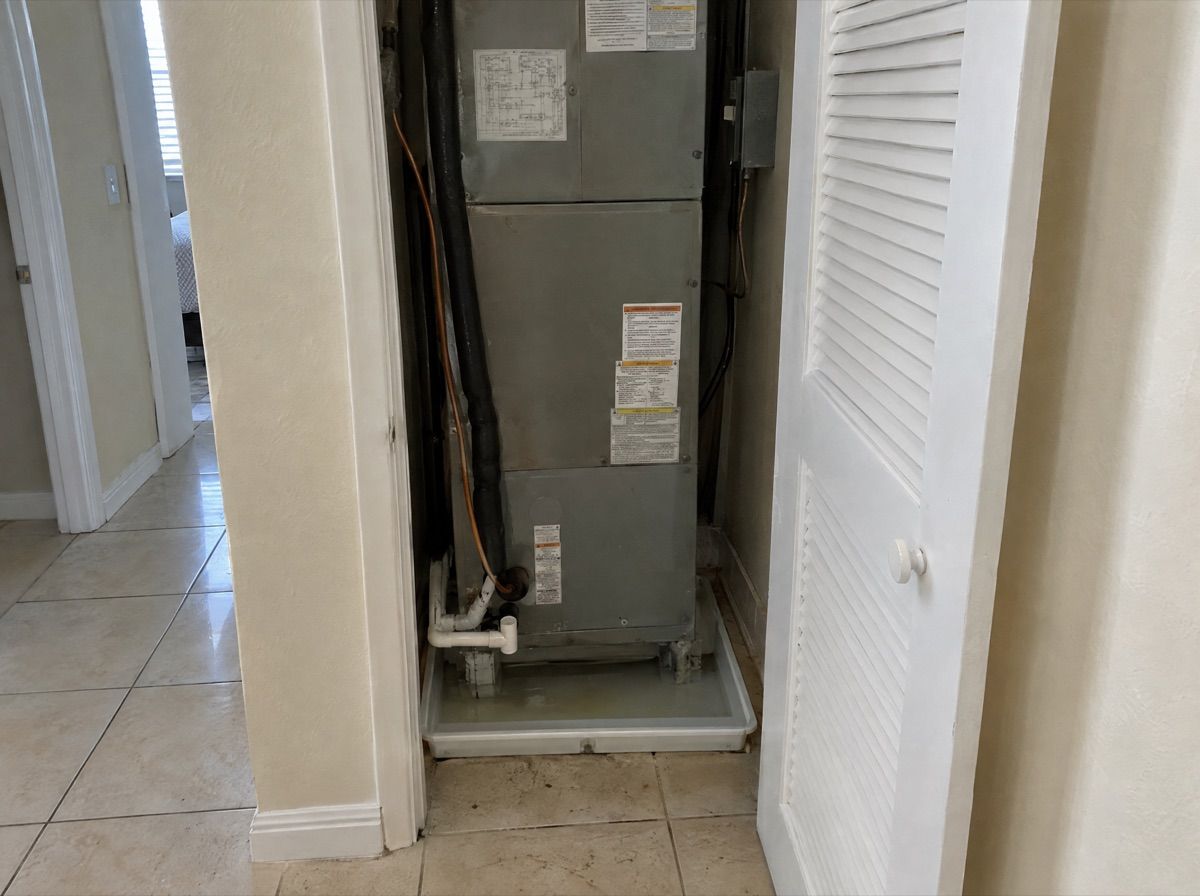
The air handler and its closet
Check around the unit for standing water, especially in a closed closet.
What to do and what not to do
What to do
- Check around the air handler for standing water and look at coils, liner surfaces, drain pans and drain lines.
- Turn the system off if you know or suspect it is contaminated.
- Leave HVAC mold work to professionals experienced with these systems.
What not to do
- Do not keep running a system you suspect is contaminated. It can spread mold through the building.
- Do not expect a wet or moldy insulated duct or duct liner to be cleaned. It should be removed and replaced.
- Do not use antimicrobial products or biocides on internally lined ductwork. None are approved for that use.

If you know or suspect a system is contaminated, turn it off until it is remediated, and leave HVAC work to professionals experienced with these systems.
Talk it through with us
Request a call. We will explain the process. The assessment is done by an independent licensed assessor you hire and pay directly, and if remediation is needed, we sell it under our agreement and a Florida-licensed remediator performs it on our behalf.
Common questions
Why is there mold around my air vents or AC?
Air handlers are damp by design: evaporator coils, drain pans and drain lines carry condensation, and duct liners stay cool. If a pan is clogged, a drain line is blocked, or a porous liner is wet, mold can grow. Florida DOH says to check around air handling units for standing water and routinely inspect coils, liner surfaces, drain pans and drain lines. If you know or suspect the system is contaminated, do not run it; it can spread mold through the building.
How is mold in an HVAC system cleaned?
EPA says HVAC mold work should be done only by professionals experienced with these systems. The system is turned off, intakes and supply vents are sealed with plastic and tape, negative pressure is maintained, contaminated porous material is bagged and removed, and cleanable surfaces are HEPA vacuumed or damp wiped and dried promptly. If insulated ducts or duct lining are wet or moldy, they cannot be cleaned effectively and should be removed and replaced. No biocide is approved for lined ductwork.
Why is there mold in my AC closet or mini-split?
Anywhere cooling equipment creates condensation, mold has a chance if the water does not drain or the surface stays wet. That includes AC closets, evaporator coils, drain pans, drain lines, and the liners and vents of mini-split and ducted systems. Florida DOH says to check around air handling units for standing water and routinely inspect coils, liners, drain pans and drain lines. Captured search data shows closets, vents, mini-splits and AC systems are common homeowner problem spots.
Sources
- Florida Department of Health MoldAccessed 2026-09-26
- U.S. EPA Mold remediation schools and commercial buildings guide chapter 3Accessed 2026-09-26
- U.S. EPA Mold cleanup your homeAccessed 2026-09-26
- U.S. EPA Mold course chapter 5Accessed 2026-09-26
- U.S. EPA Mold course chapter 2Accessed 2026-09-26

Reviewed by Othmar 2026-10-05: "Approve all launch pages for production" (2026-10-01)