
Basics
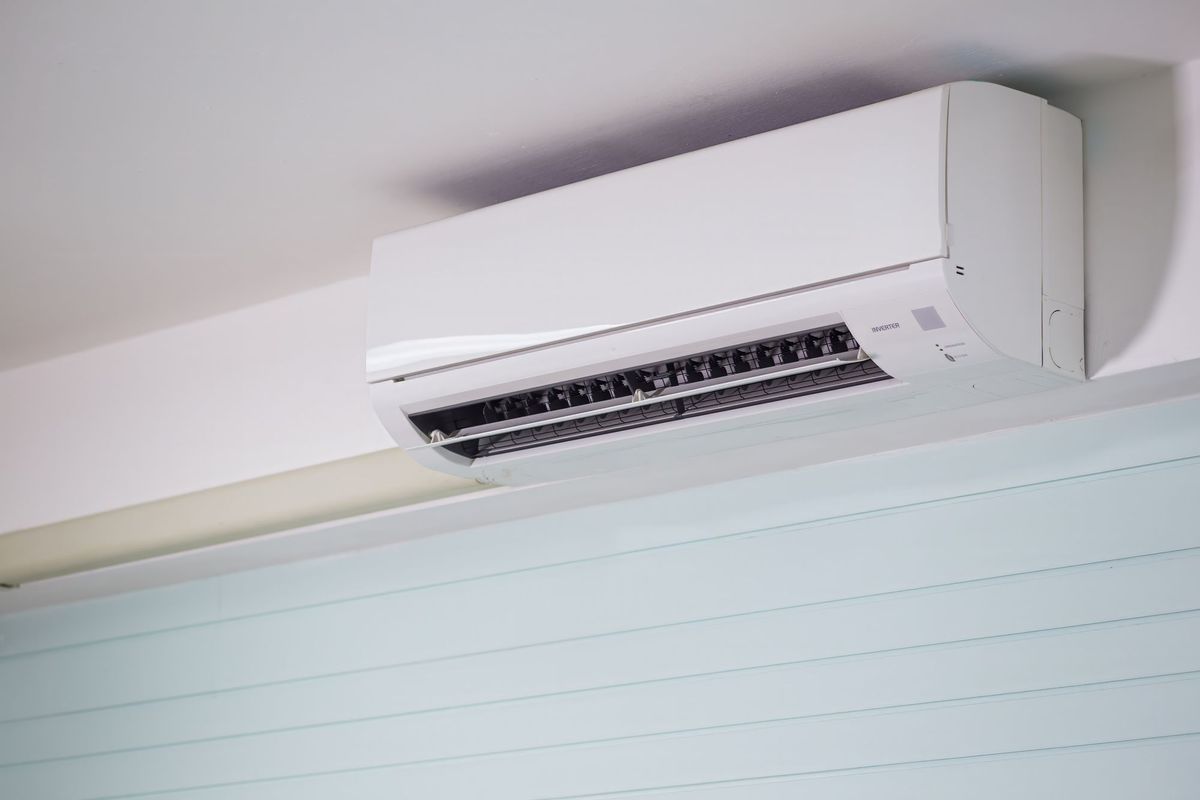
Mold in an air conditioner unit
Air conditioning removes heat and leaves condensation behind. When a pan, a drain line or a duct liner stays wet, growth can start there.
How we work

English or Spanish
One call, in your language.

One point of contact
No searching. No lists of companies.

Independent assessment
By a licensed assessor you hire and pay directly.

Licensed remediation
We sell it; a Florida-licensed remediator performs it on our behalf.
Why cooling systems get damp
Air conditioning systems produce condensate at their coils. Standing water or damp materials around the system can support mold growth.
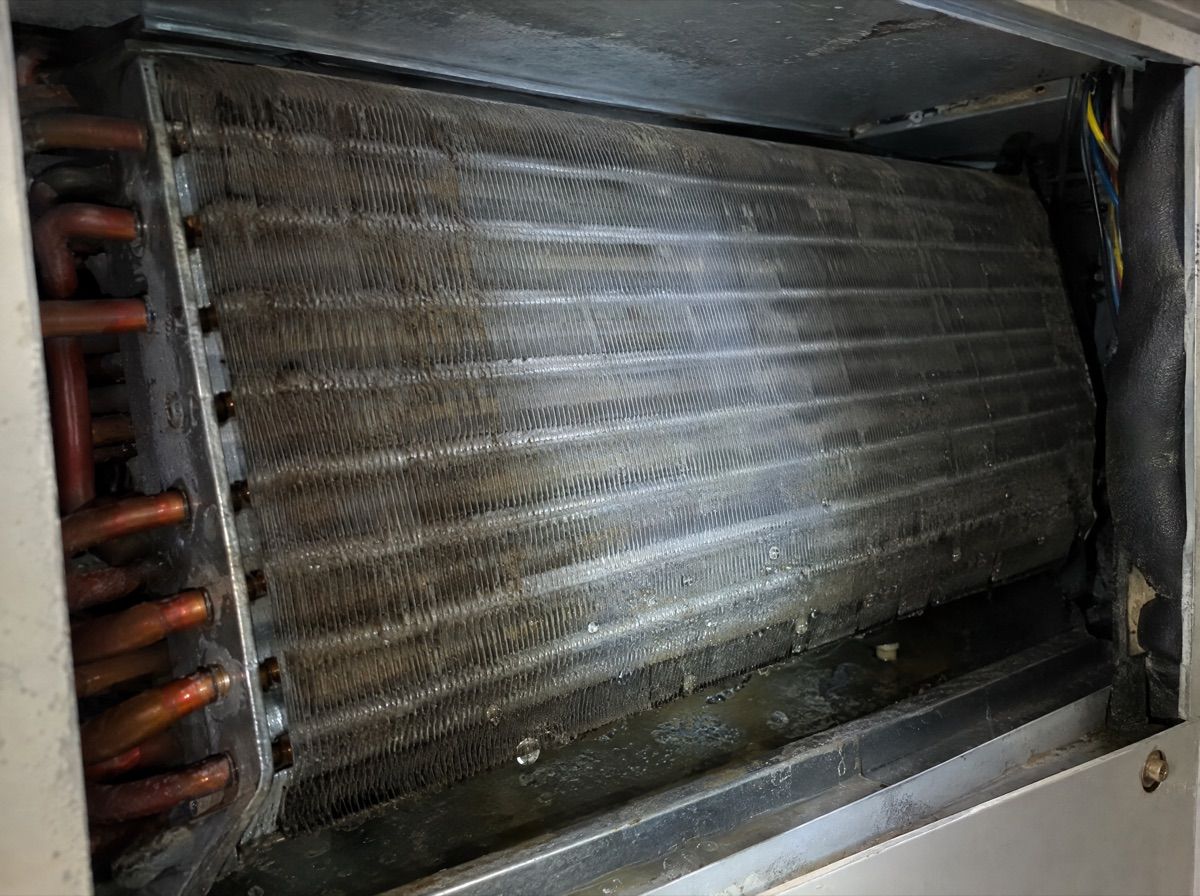
Florida health officials say to check around air handling units for standing water and to routinely inspect coils, liner surfaces, drain pans and drain lines.
When to turn the system off
A moldy HVAC system moves air through the home. If you know or suspect the system is contaminated, turn it off and do not use it until it is remediated.
Wet or moldy duct lining cannot be cleaned effectively and should be removed and replaced.
- Check around the unit for standing water.
- Inspect coils, liner surfaces, drain pans and drain lines.
- Leave HVAC mold work to professionals experienced with these systems.
Common situations
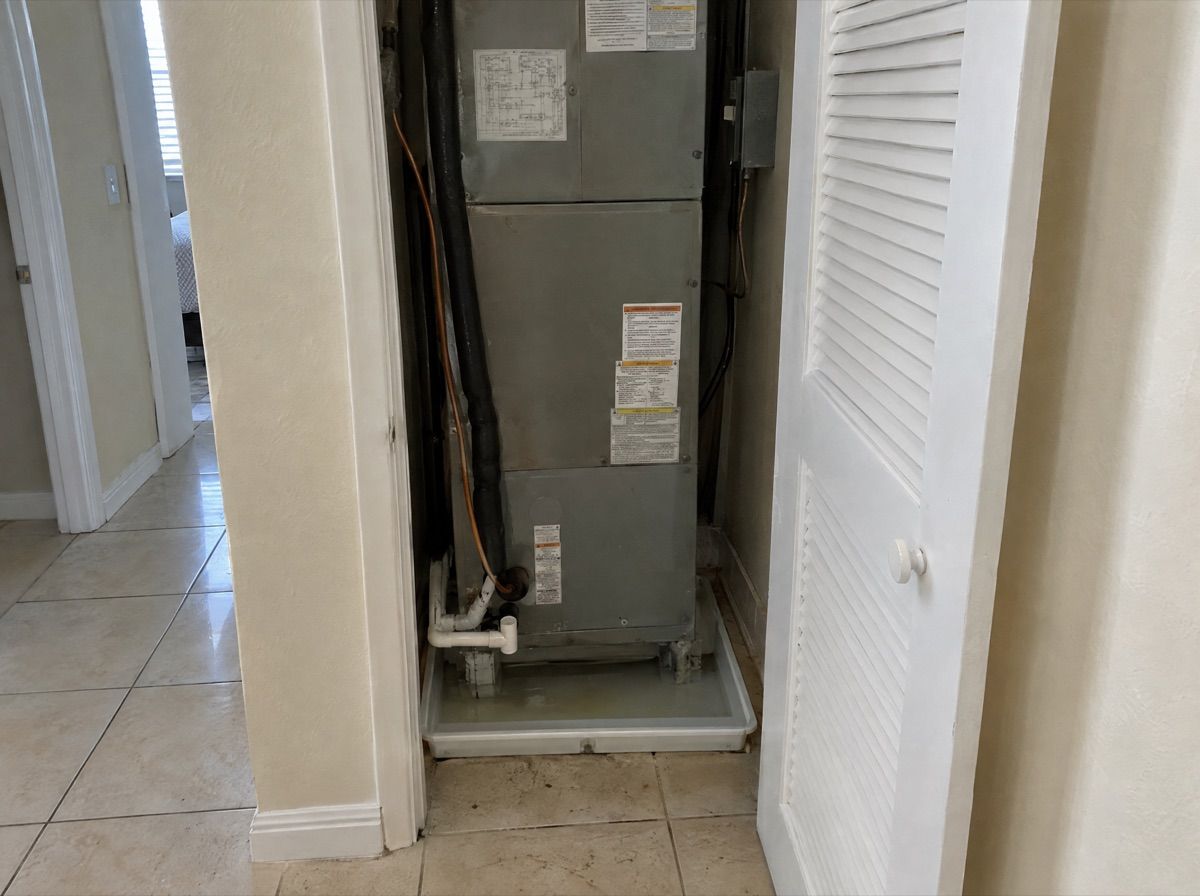
Water sitting in the drain pan
A pan that does not drain leaves standing water under the unit.
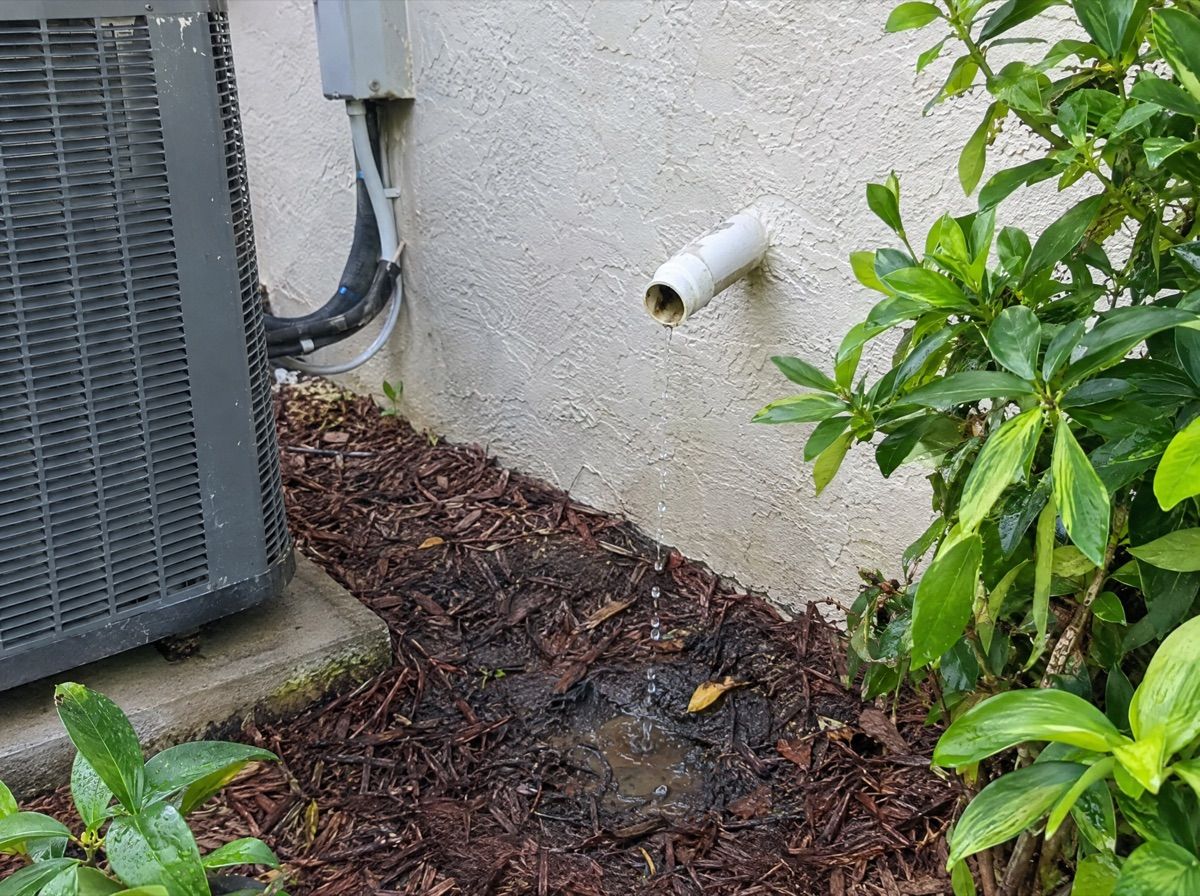
A blocked or slow drain line
Drain lines carry condensate away; when they stop, water stays behind.
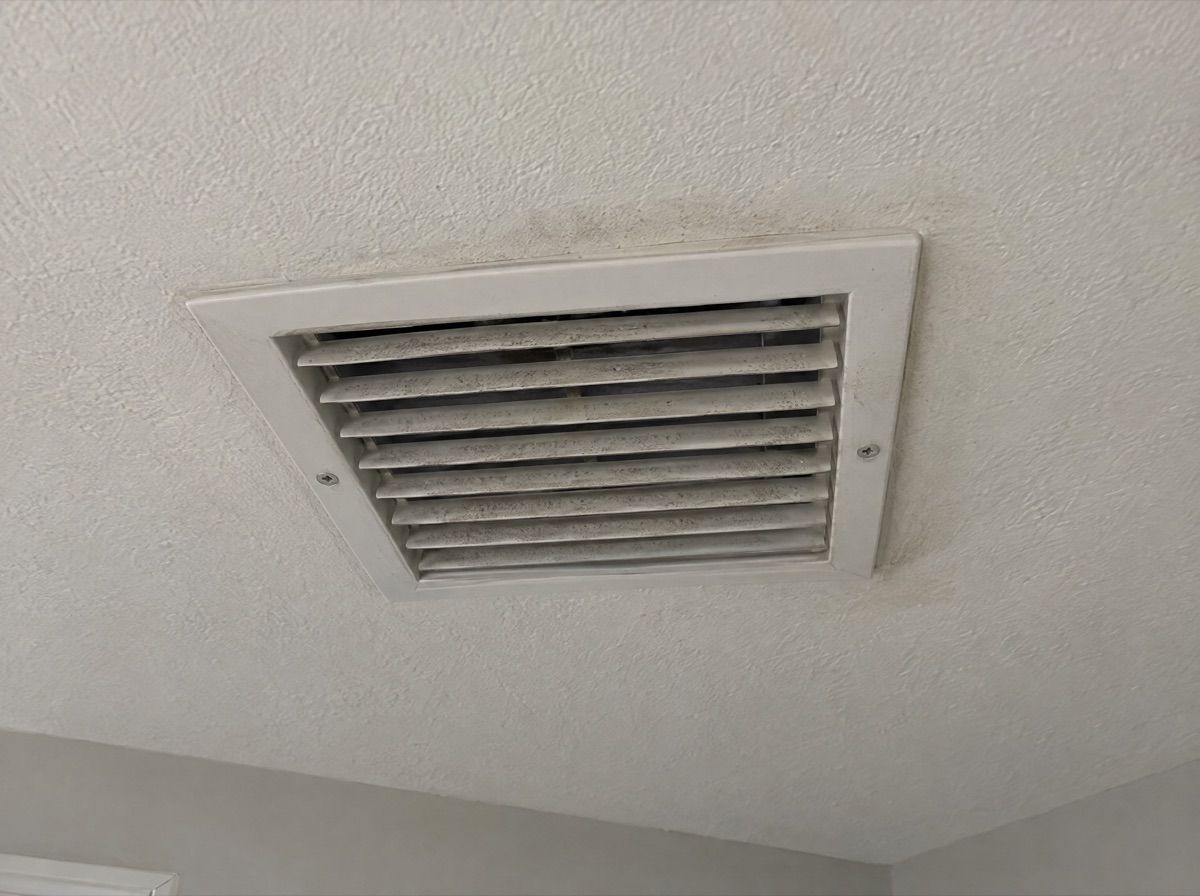
A damp duct liner
Hidden growth can sit in porous thermal or acoustic duct liners.

Do not run a system you know or suspect is contaminated. It could spread mold through the building.
Guides in this section

Common questions

Should I have my air ducts cleaned for mold?
EPA does not recommend routine air duct cleaning, only as needed. It says duct cleaning has never been shown to actually prevent health problems, and EPA neither sets duct cleaning standards nor certifies or endorses duct cleaning companies. If insulated ducts or duct lining are wet or moldy, they cannot be effectively cleaned and should be removed and replaced. HVAC mold work should be done by professionals experienced with these systems, with the system off until it is remediated.
Should I turn on the AC after a flood?
Only if you know the system is not contaminated. EPA says do not run an HVAC system if you know or suspect it is contaminated with mold, because it could spread mold through the building, and a mold-contaminated system should be turned off and not used until remediated. Dry the rest of the home with dehumidifiers and airflow instead. If water reached the air handler, coils, drain pan or ducts, have the system inspected before you run it.
Does the AC remove humidity?
Yes, that is part of how it works. Warm humid air passes over cold evaporator coils, moisture condenses and drains away before cooler drier air is recirculated. Two habits matter: keep the fan on AUTO rather than ON, because FSEC experiments measured lower indoor humidity in AUTO, and avoid an oversized unit, because moisture removal does not reach full capacity for roughly the first three minutes of a cooling cycle, so shorter cycles remove less water.
Sources
- Florida Department of Health MoldAccessed 2026-09-26
- U.S. EPA Mold remediation schools and commercial buildings guide chapter 3Accessed 2026-09-26
- U.S. EPA Mold cleanup your homeAccessed 2026-09-26
- U.S. EPA Mold course chapter 5Accessed 2026-09-26
- U.S. EPA Mold course chapter 2Accessed 2026-09-26
- U.S. EPA Should you have air ducts your home cleanedAccessed 2026-09-26
- CDC Guide to mold cleanupAccessed 2026-09-26
- UF/IFAS Water wednesday recap understanding Florida homesAccessed 2026-09-26
- energyresearch.ucf.edu Mold growthAccessed 2026-09-26