
Prevention
How to prevent mold in a Florida home
Mold needs moisture, so prevention is moisture control: keep indoor humidity in range, dry wet materials fast, and fix leaks while they are small.
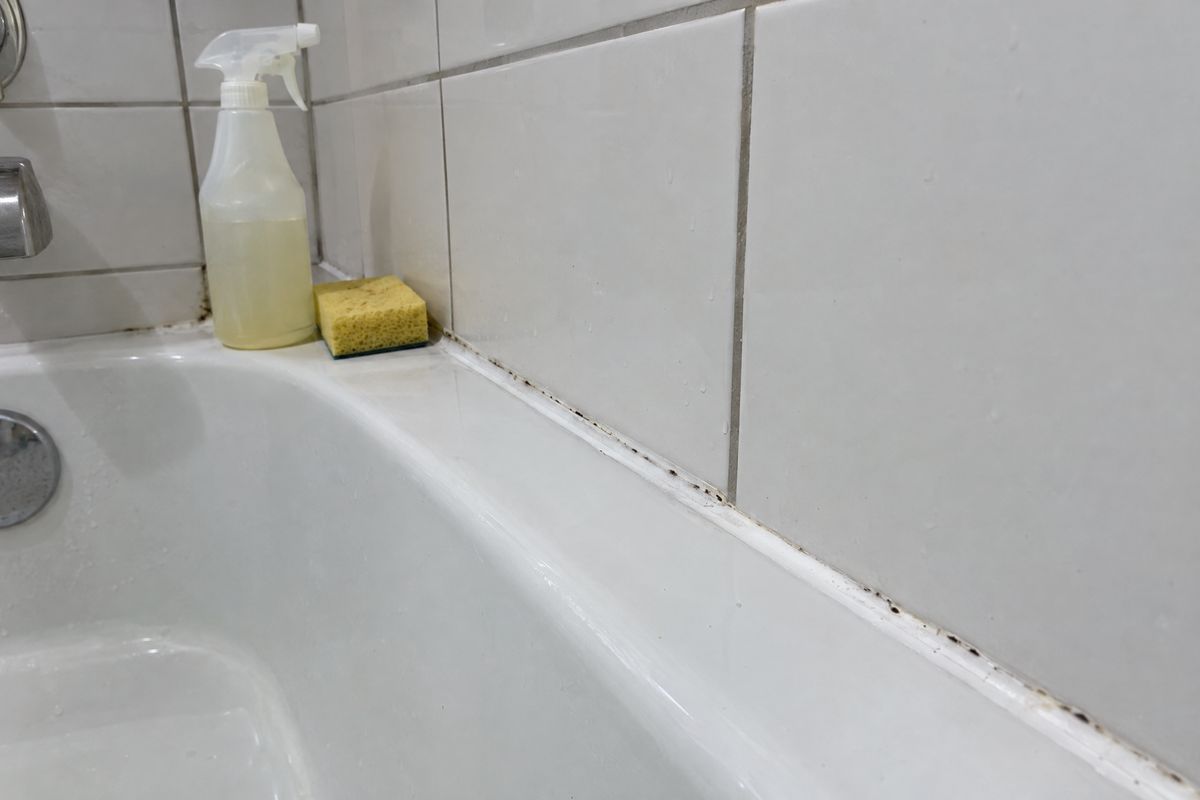
How we work

English or Spanish
One call, in your language.

One point of contact
No searching. No lists of companies.

Independent assessment
By a licensed assessor you hire and pay directly.

Licensed remediation
We sell it; a Florida-licensed remediator performs it on our behalf.
Moisture control is the whole job
EPA recommends keeping indoor humidity below 60 percent if possible, ideally between 30 and 50 percent. CDC says to keep humidity no higher than 50 percent all day, and Florida DOH says below 60 percent with below 50 percent best because it also helps control dust mites.
The key to mold control is moisture control. Dry water-damaged areas and items within 24 to 48 hours, fix leaky plumbing and leaks in the building envelope as soon as possible, and watch for condensation and wet spots.
A humidity meter costs about $10 to $50 and tells you where you stand. One reading is a starting point, not a full picture of a home.
- Below 60%
- EPA: keep indoor humidity below this if possible
- 30 to 50%
- EPA ideal indoor humidity range
- No higher than 50%
- CDC all-day humidity target
Where Florida homes get wet
Moisture problems show up in a handful of ordinary places. These are the ones to watch.
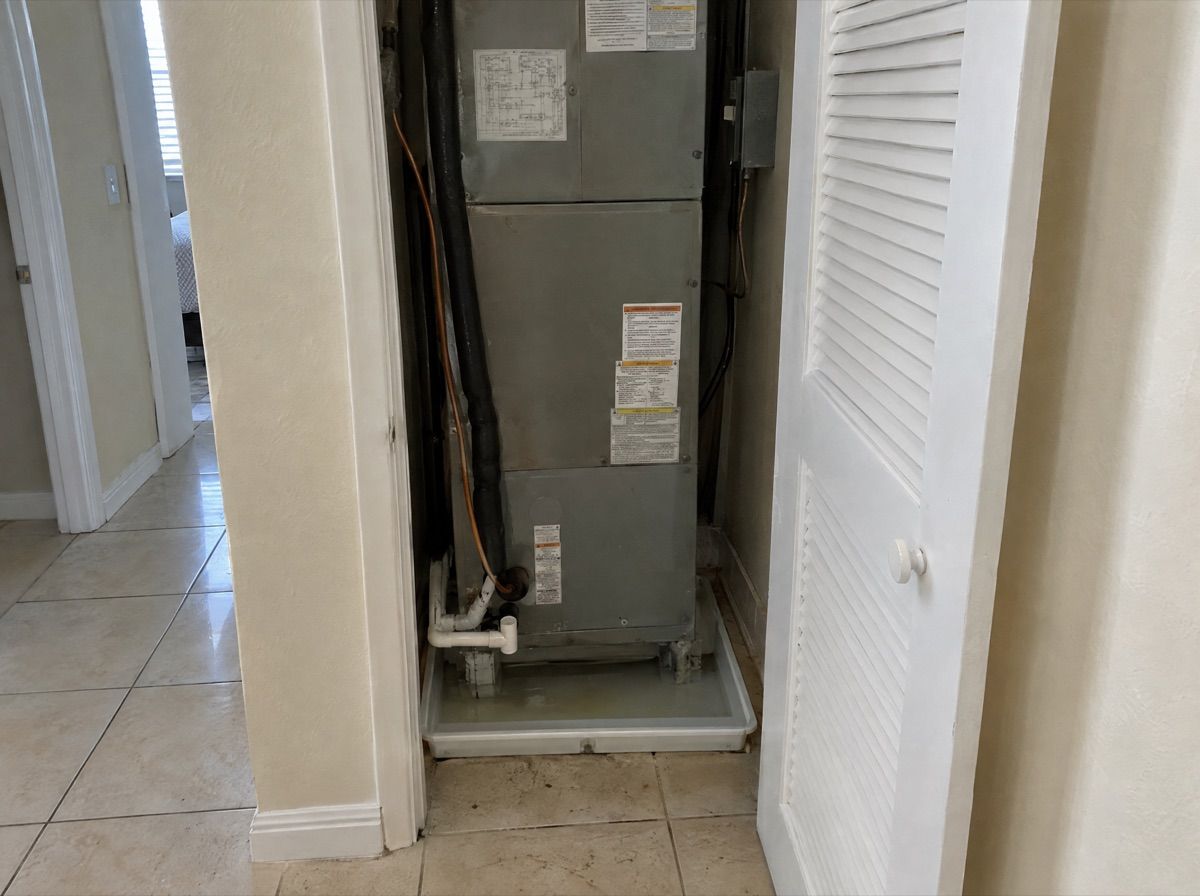
AC and drip pans
Keep drip pans clean and drain lines unobstructed. FSEC says indoor humidity should not regularly go above 55 percent on summer days with the air conditioning on. If it does, have the system and ducts checked by a qualified air conditioning professional.
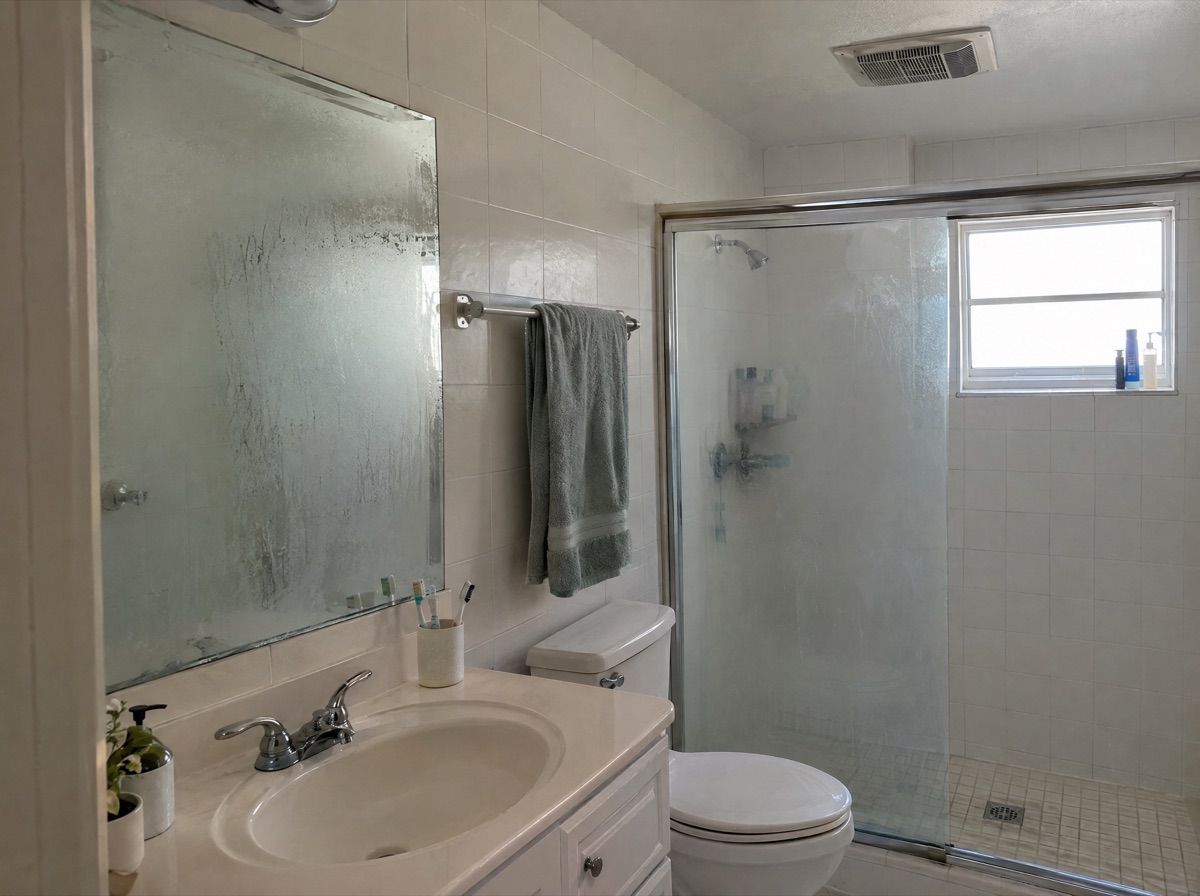
Bathroom and kitchen
Run the exhaust fan or open a window when showering, and use exhaust fans or open windows when cooking, running the dishwasher or washing dishes.
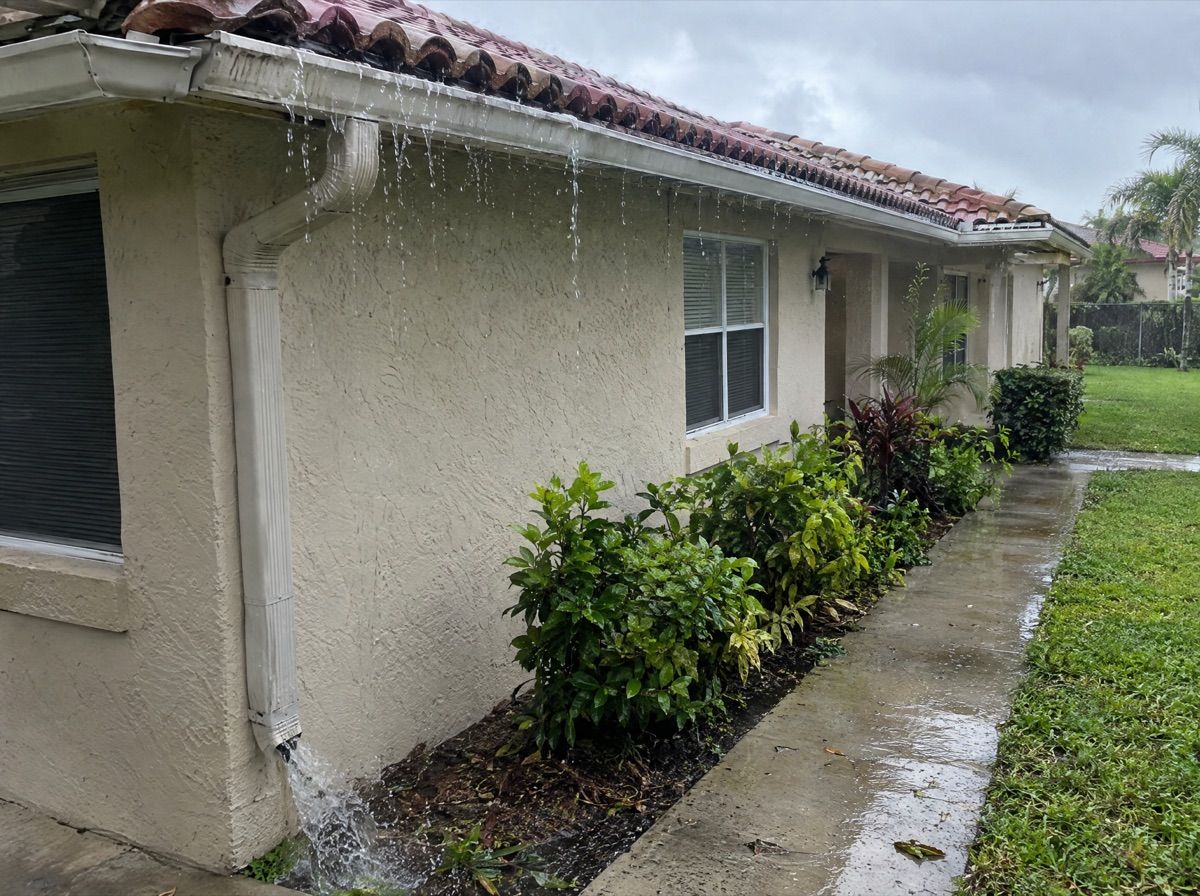
Leaks, gutters and drainage
Fix leaks in plumbing and the building envelope promptly, clean and repair roof gutters, and make sure the ground slopes away from the foundation.
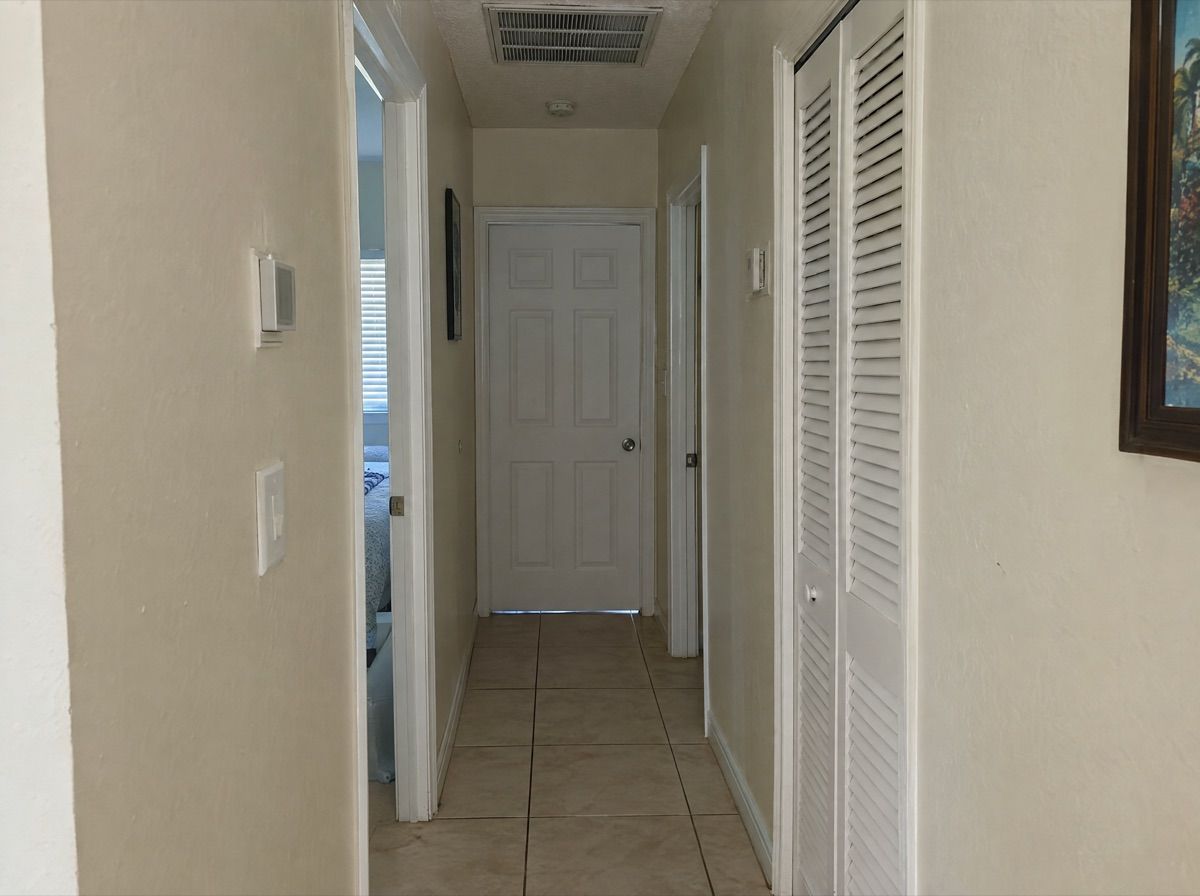
Airflow and closed doors
FSEC says to keep interior doors open when the air conditioning is on, unless each room has its own return or a return-air pathway, so closed doors do not depressurize the home.
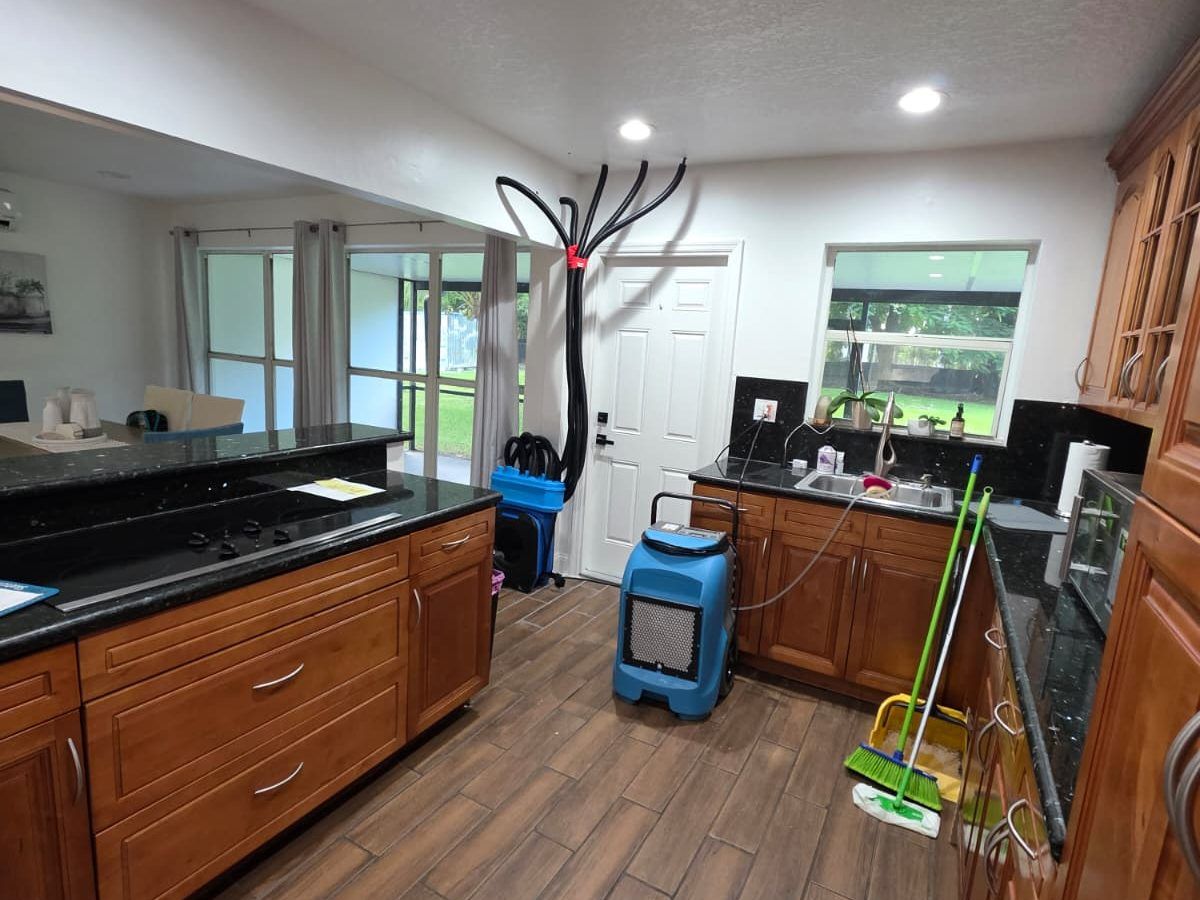
Keep air moving and surfaces dry
Prevention is a set of habits: run the bathroom and kitchen fans, keep interior doors open when the air conditioning runs, and vent dryers and stoves to the outside.
Find leaks early and watch for condensation and wet spots before they become a moisture problem.
- Run the bathroom fan or open a window when showering.
- Vent clothes dryers, stoves and similar appliances to the outside where possible.
- Fix leaky plumbing and leaks in the building envelope as soon as possible.
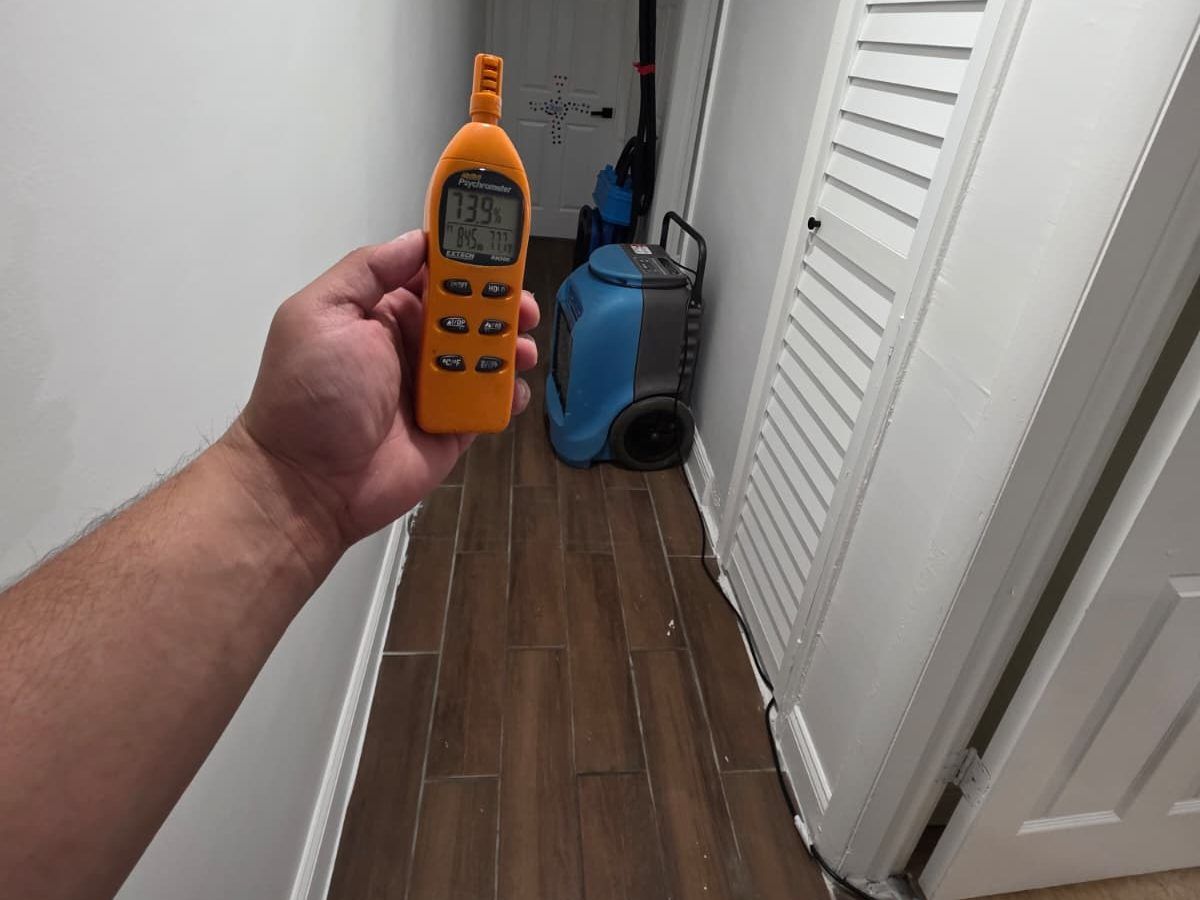
Watch the AC and the low spots
Places worth checking in a Florida home include the ones you rarely look at: the AC drain pan, a crawl space with a bare earth floor, the gutters and the ground next to the foundation.
Keep those areas dry and clear, and check whether the air conditioning can hold indoor humidity in range on its own.
- Keep drip pans clean and drain lines unobstructed.
- Clean roof gutters and slope the ground away from the foundation.
- FSEC says indoor humidity should not regularly go above 55 percent on summer days with the air conditioning on. If it does, have the system and ducts checked by a qualified air conditioning professional.

These humidity numbers come from EPA, CDC and Florida DOH. They are agency recommendations, not a promise.
Talk it through with us
Request a call. We will explain the process. The assessment is done by an independent licensed assessor you hire and pay directly, and if remediation is needed, we sell it under our agreement and a Florida-licensed remediator performs it on our behalf.
Common questions
What indoor humidity level prevents mold?
Keep indoor relative humidity below 60%, ideally between 30% and 50%. EPA gives that range, CDC says keep it no higher than 50% all day, and Florida DOH says below 60% with below 50% best because it also controls dust mites. ASHRAE's engineering target is a maximum dew point of 60 F during unoccupied hours, with sustained gypsum-board moisture above 15% or indoor dew point above 60 F as early warning signs. Multiple measures beat one reading.
Does the AC remove humidity?
Yes, that is part of how it works. Warm humid air passes over cold evaporator coils, moisture condenses and drains away before cooler drier air is recirculated. Two habits matter: keep the fan on AUTO rather than ON, because FSEC experiments measured lower indoor humidity in AUTO, and avoid an oversized unit, because moisture removal does not reach full capacity for roughly the first three minutes of a cooling cycle, so shorter cycles remove less water.
Do I need a dehumidifier in Florida?
Only if your AC cannot keep humidity in range. EPA puts the target below 60% relative humidity, ideally 30% to 50%, and says that if you have a central AC system and need a dehumidifier to stay below 60%, the air conditioning system should be examined for problems. Check the drain pan, drain line, filter, refrigerant charge and sizing before buying a bigger dehumidifier. A humidistat can switch the HVAC on automatically when humidity rises.
How do I ventilate a bathroom and kitchen to prevent mold?
Run the exhaust fan or open a window when showering, and use exhaust fans or open windows when cooking, running the dishwasher or washing dishes. Vent moisture-generating appliances such as clothes dryers, stoves and kerosene heaters to the outside where possible, because combustion appliances add water vapor unless vented out. FSEC suggests interlocks or timers so bathroom fans are not left running, or humidistat control, and kitchen and bath fans should run while cooking or bathing.
How do I prevent mold in my home?
Fix water before it becomes growth. EPA advises fixing leaky plumbing and building-envelope leaks as soon as possible, watching for condensation and wet spots, cleaning and repairing roof gutters regularly, and making sure the ground slopes away from the foundation so water does not enter or collect. Keep AC drip pans clean and drain lines unobstructed, and reduce humidity. That combination addresses the moisture mold needs; cleaning growth without these fixes only hides the problem for a while.
How do I stop mold from coming back?
Fix the moisture or it will return. Cleaning removes what you can see, but the water source keeps feeding new growth, which is why EPA and Florida DOH focus on moisture control and removal rather than killing mold. Dead mold can still cause allergic reactions, and bleach is not recommended as a routine treatment. Dry the area fast, correct leaks and condensation, keep humidity below 60%, and check the repair after the next heavy rain.
When is mold season in Miami?
There is no official season, but the wet months are the risk window. NOAA monthly normals for Miami show June at 10.51 inches, August at 9.58 and September at 10.22, against roughly 1.8-3.5 inches in the dry season. Dew points are at or above 70 F from June through September. EPA's guidance to dry water-damaged materials within 24 to 48 hours applies all year.
Sources
- U.S. EPA Brief guide mold moisture and your homeAccessed 2026-09-26
- CDC AboutAccessed 2026-09-26
- Florida Department of Health MoldAccessed 2026-09-26
- U.S. EPA Mold remediation schools and commercial buildings guide chapter 2Accessed 2026-09-26
- energyresearch.ucf.edu Mold growthAccessed 2026-09-26
- U.S. EPA Mold course chapter 2Accessed 2026-09-26
- UF/IFAS Water wednesday recap understanding Florida homesAccessed 2026-09-26
- U.S. EPA Mold remediation schools and commercial buildings guide chapter 3Accessed 2026-09-26
- U.S. EPA Mold course chapter 1Accessed 2026-09-26