
Remediation
Mold remediation and removal in Miami
Mold remediation in Miami arranged through one point of contact, in English or Spanish. Our company sells the remediation, and a Florida-licensed mold remediator performs the work on our behalf.
How we work

English or Spanish
One call, in your language.

One point of contact
No searching. No lists of companies.

Independent assessment
By a licensed assessor you hire and pay directly.
Licensed remediation
We sell it; a Florida-licensed remediator performs it on our behalf.
Mold remediation in Miami, handled for you
Mold removal in Miami means remediation: removing the mold growth and fixing the moisture that feeds it. Hard, non-porous surfaces can generally be wiped or scrubbed with water or water and detergent and then dried thoroughly. Moldy porous materials such as ceiling tiles and carpet may have to be thrown away, because growth gets into crevices that are difficult or impossible to clean.
We handle the arrangement from one point of contact. You call us, we visit your home at no cost for a visual walkthrough and explain the process, you hire an independent licensed mold assessor and pay that assessor directly, and we sell the remediation under our agreement. A Florida-licensed mold remediator performs the work on our behalf. We serve Miami-Dade, south Broward and Monroe counties.
How it works
Call or request a call
Tell us what you are seeing and when it started.
We visit at no cost
Our staff makes a home visit, a visual walkthrough, and explains the process.
You hire an independent licensed mold assessor
You hire and pay the assessor directly. The assessor's findings guide the scope of work.
We give you a written scope and agreement
We put the remediation scope and our agreement in writing before work starts.
A Florida-licensed mold remediator does the work
The remediator performs the work on our behalf, following the assessor's protocol.
An independent assessor checks the result
A follow-up check is done by an independent licensed mold assessor, whom you hire and pay directly.
What the work includes
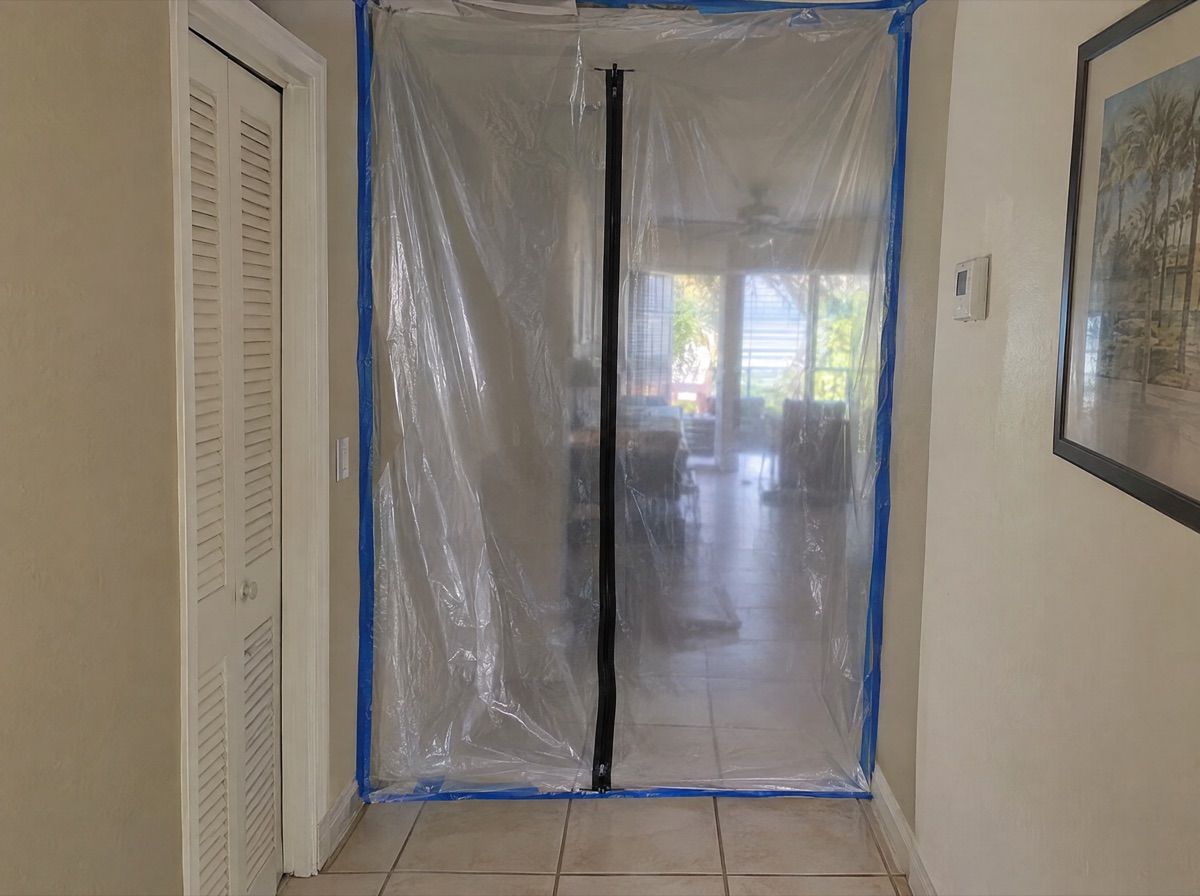
Containment
Containment limits the spread of mold and dust beyond the work area. A limited job can use one layer of plastic with sealed vents and negative air pressure; a larger job can need double plastic and an airlock.
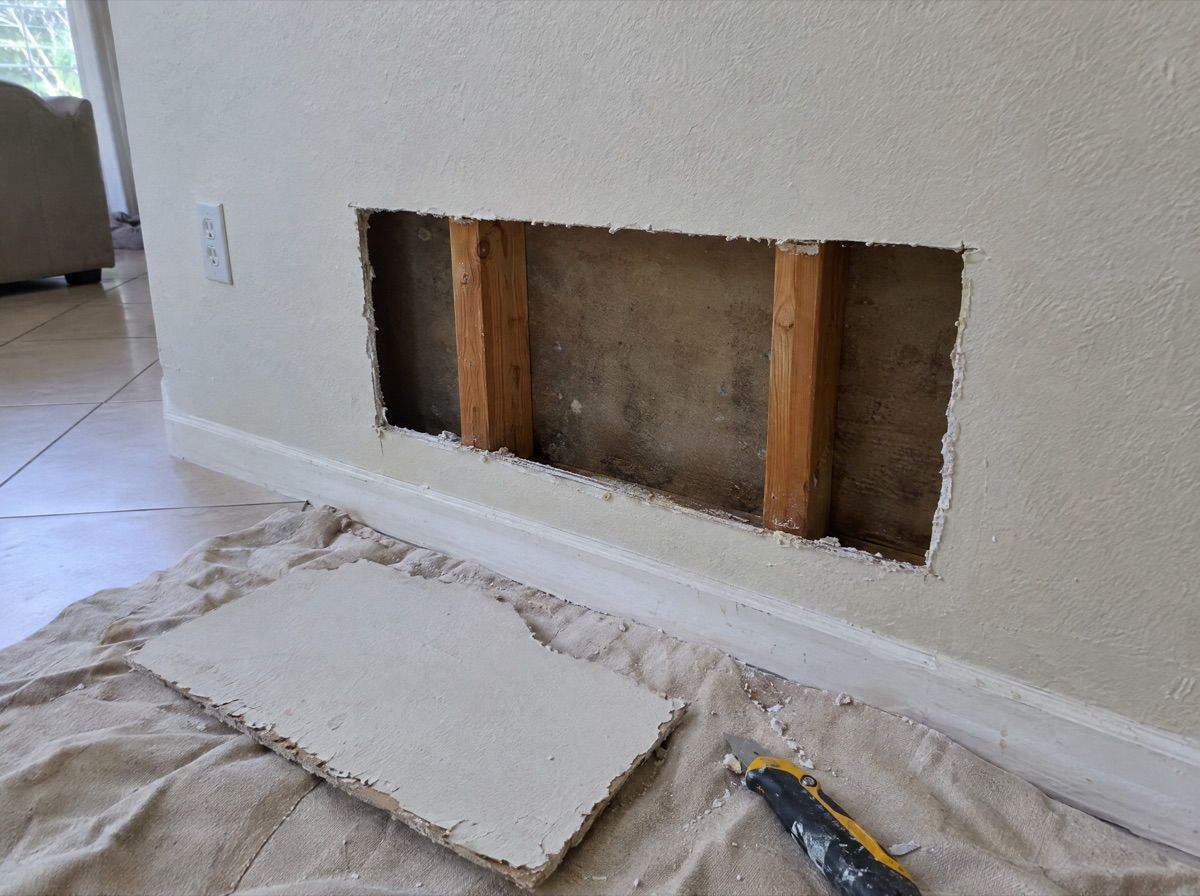
Removing wet porous materials
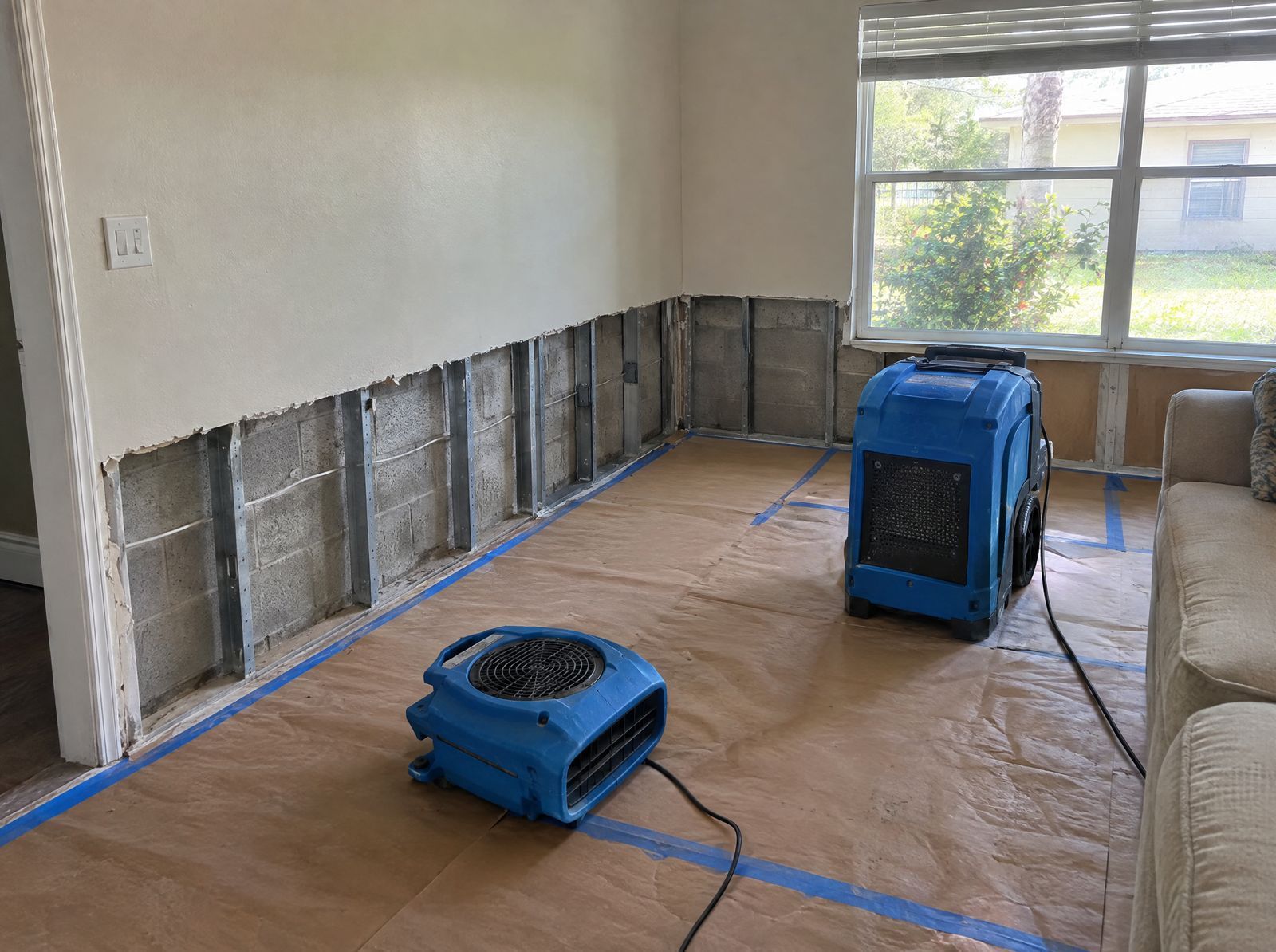
Moldy ceiling tiles, carpet and insulation often cannot be fully cleaned because growth gets into crevices. Materials that cannot be cleaned are removed and bagged for disposal.
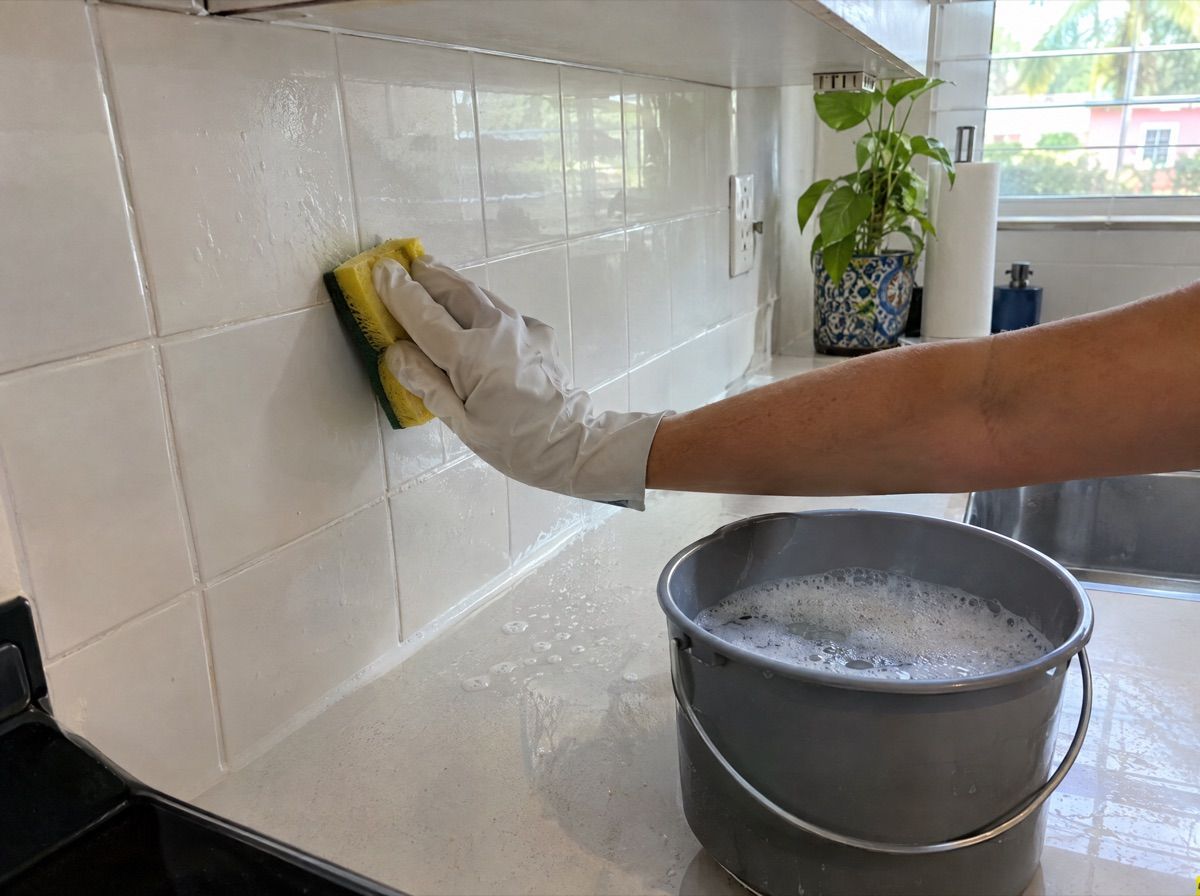
Cleaning and HEPA vacuuming
Hard, non-porous surfaces can generally be wiped or scrubbed with water or water and detergent, then dried quickly. HEPA vacuuming is final cleanup once materials are dry and debris is removed.
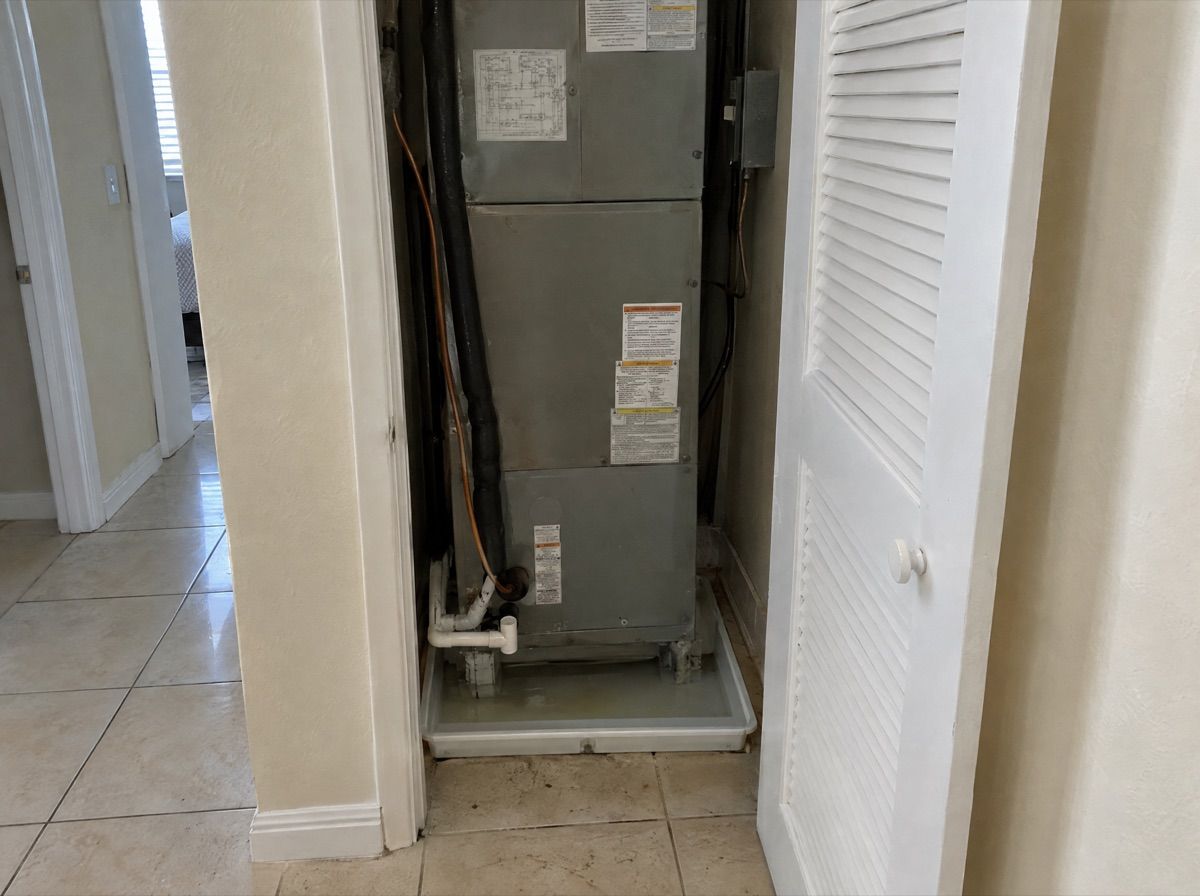
Drying and fixing the moisture source
The moisture source has to be fixed too, not only the visible growth. Repairs such as plumbing or roofing are done by a properly licensed contractor. EPA says to dry water-damaged areas and items within 24 to 48 hours.
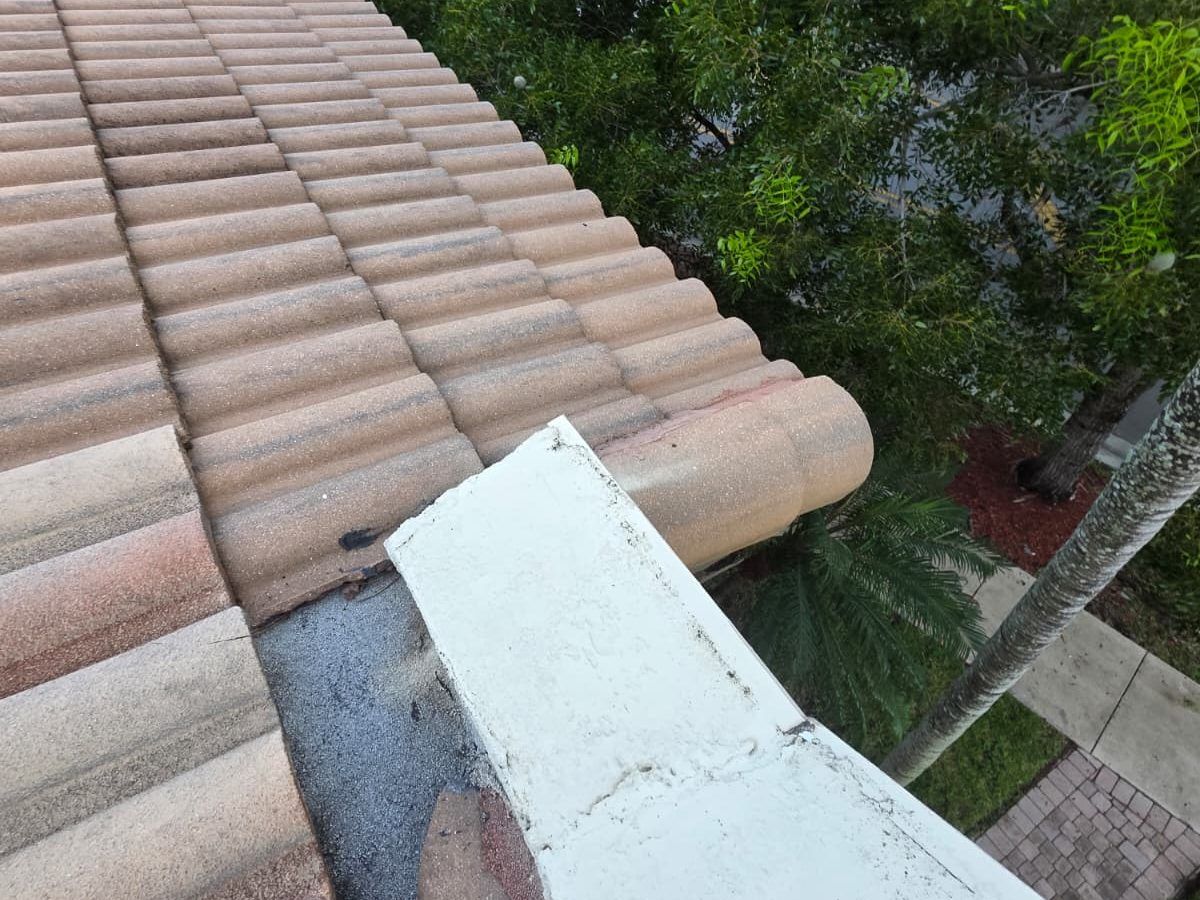
Why mold is common in Miami
Miami's air stays wet. NOAA's 1991-2020 normals put the annual mean dew point at 67.0 F, and every hourly normal dew point from June through September is at or above 70 F.
Rainfall follows the same rhythm. Monthly normals run about 1.8 to 3.5 inches in the dry season and 6.3 to 10.5 inches from May through October, and cooling degree days at a 65 F base peak near 590 to 595 per month in July and August. Those conditions make moisture control a year-round job in a Miami home.
- 24 to 48 hours
- Window to dry water-damaged areas
- More than 10 sq ft
- Mold growth size used in Florida's licensing definitions
- 70 F
- Miami normal dew point at or above this, June through September
Until we visit
What to do
- Stop the water at its source if you can, and fix leaky plumbing or building-envelope leaks as soon as possible.
- Dry wet areas and items right away. EPA says that in most cases mold will not grow if they dry within 24 to 48 hours.
- After a flood, throw away anything that was wet and cannot be cleaned and dried completely within 24 to 48 hours.
What not to do
- Do not run a mold-contaminated air conditioning system; turn it off until it is remediated.
- Do not paint or caulk over moldy surfaces; paint is likely to peel and does not stop the mold.
- Never mix bleach with ammonia or other cleansers.

Our home visit is a visual walkthrough. It is not an inspection, a mold assessment, a test or sampling. A mold assessment is done by an independent licensed mold assessor you hire and pay directly.
Talk it through with us
Request a call. We will explain the process. The assessment is done by an independent licensed assessor you hire and pay directly, and if remediation is needed, we sell it under our agreement and a Florida-licensed remediator performs it on our behalf.
Common questions
How do I get rid of mold?
Remove the growth and fix the moisture. Mold can generally be removed from non-porous hard surfaces by wiping or scrubbing with water or water and detergent, then drying quickly and thoroughly. Porous moldy materials such as ceiling tiles and carpet often have to be discarded because growth gets into crevices. Cleaning alone is not enough if the moisture source stays: dry wet or damp materials as soon as possible, because EPA says mold will not grow in most cases if they dry within 24 to 48 hours. Dead mold can still cause allergic reactions, so removal, not killing, is the goal.
How do I choose a mold remediation company?
Verify the Florida license of the individual performing the regulated work and ask for proof of the required insurance. Florida requires mold assessors and remediators to use a signed or otherwise authenticated contract; ask for an itemized scope in writing. Florida law limits remediation on a structure that a mold assessor or the assessor's company assessed within the prior 12 months, with an exception for certified Division I contractors, and it bars referral payments between assessors and remediators. Ask who does the final verification, and get the quote in writing before work starts.
Do I need to leave the house during mold remediation?
It depends on the size and containment level. EPA recommends full containment for moldy areas over 100 square feet or when work could contaminate occupied space; it uses double plastic and an airlock, with workers in protective equipment. The appropriate containment depends on the situation and professional judgment. EPA and CDC say people with allergies, immune suppression, lung disease, asthma or COPD should avoid mold cleanup, and children should not take part in post-flood cleanup. If anyone in the home is in those groups, plan to be out of the work zone.
Why is mold so common in Miami-Dade?
Miami's outdoor air is humid for most of the year. NOAA's 1991-2020 normals show Miami averaging a 67.0 F annual dew point, with every hourly normal dew point from June through September at or above 70 F. Monthly precipitation normals run roughly 1.8-3.5 inches in the dry season and 6.3-10.5 inches from May through October, and cooling degree days at a 65 F base peak near 590-595 per month in July and August. Those normals describe outdoor conditions; indoor moisture still depends on leaks, ventilation and air conditioning.
When is mold season in Miami?
There is no official season, but the wet months are the risk window. NOAA monthly normals for Miami show June at 10.51 inches, August at 9.58 and September at 10.22, against roughly 1.8-3.5 inches in the dry season. Dew points are at or above 70 F from June through September. EPA's guidance to dry water-damaged materials within 24 to 48 hours applies all year.
Sources
- U.S. EPA Brief guide mold moisture and your homeAccessed 2026-09-26
- U.S. EPA Mold remediation schools and commercial buildings guide chapter 3Accessed 2026-09-26
- U.S. EPA Mold remediation schools and commercial buildings guide chapter 4Accessed 2026-09-26
- U.S. EPA Mold remediation schools and commercial buildings guide chapter 2Accessed 2026-09-26
- NOAA AccessAccessed 2026-09-26
- NOAA V1Accessed 2026-09-26
- Florida StatutesAccessed 2026-09-26
- U.S. EPA Mold course chapter 5Accessed 2026-09-26
- Florida Department of Health MoldAccessed 2026-09-26
- CDC Guide to mold cleanupAccessed 2026-09-26
- Florida StatutesAccessed 2026-09-28
- Florida StatutesAccessed 2026-09-26
- Florida StatutesAccessed 2026-09-26
- Florida StatutesAccessed 2026-09-26
- CDC Clean upAccessed 2026-09-26