
Florida mold laws and regulations
Florida licenses individual mold assessors and mold remediators for the services defined in Part XVI of Chapter 468, which cover mold growth of more than 10 square feet. Other contractor licensing rules may also apply.
How we work

English or Spanish
One call, in your language.

One point of contact
No searching. No lists of companies.

Independent assessment
By a licensed assessor you hire and pay directly.

Licensed remediation
We sell it; a Florida-licensed remediator performs it on our behalf.
Who Florida licenses
Florida defines mold assessment and mold remediation as work on mold growth or contamination greater than 10 square feet. Offering or performing a service defined as mold assessment or mold remediation generally requires compliance with Part XVI of Chapter 468, unless a statutory exemption applies, and the titles mold assessor and mold remediator are reserved.
Licenses belong to individuals, not to companies. DBPR licenses only individuals, and a corporation or partnership may offer mold assessment or remediation to the public only through licensees; the entity itself cannot hold the license and remains responsible for its agents.
The 10 square foot line defines the mold services covered by Part XVI. It is not a safety threshold. Separate contractor licensing, building code or permit requirements may apply to other work.
What the rules cover
The statute is specific about who may do the work, what a contract needs and how to check a credential.
Licensed individuals
Initial licensure by examination generally requires documented education or experience, training, fees and a state-approved exam; licensure by endorsement has different requirements. Mold licenses renew every two years, with continuing education requirements.

Reserved titles
Florida law restricts the titles mold assessor and mold remediator, and prohibits offering as well as performing unlicensed assessment or remediation.

Contracts
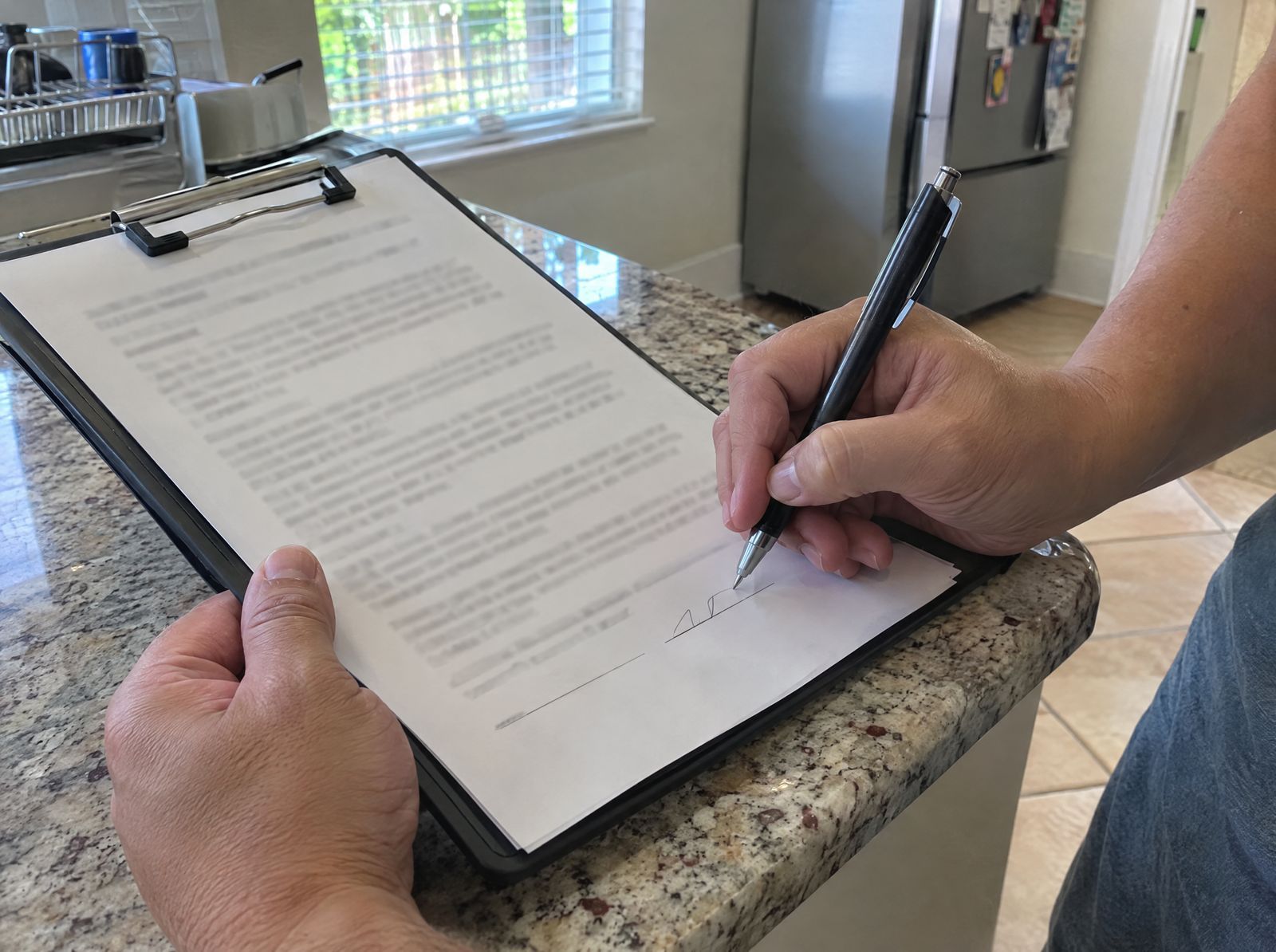
A mold assessment or remediation contract must be a document or electronic record signed or otherwise authenticated by the parties. A contractor may not provide an agreement authorizing repairs under a property insurance claim without a good-faith, itemized estimate of the services and materials.

Verification
Verify the individual's mold license in the DBPR license search. A company registration or a private directory listing is not a Florida mold license.

The 10 square foot line is not a safety threshold, and it does not mean a smaller job avoids other rules. Chapter 489 licensing, building codes and local permits can still apply.
Talk it through with us
Request a call. We will explain the process. The assessment is done by an independent licensed assessor you hire and pay directly, and if remediation is needed, we sell it under our agreement and a Florida-licensed remediator performs it on our behalf.
Common questions
Do you need a license to remove mold in Florida?
It depends on the job. Florida defines mold assessment and mold remediation in Part XVI by reference to mold growth greater than 10 square feet. Offering or performing those services generally requires the applicable license, unless a statutory exemption applies. Examples include a residential property owner working on their own property, an employee directly supervised by a licensed assessor or remediator, and certain people acting within another license's scope. The 10 square-foot threshold is a licensing definition, not a general homeowner prohibition.
Are mold businesses licensed in Florida?
No. DBPR licenses individuals, not mold businesses. Corporations and partnerships may offer mold assessment or remediation to the public only through licensed individuals, and the corporation cannot hold the license itself even though it remains responsible for its agents' work. A business offering both services needs the assessor and remediator license categories; DBPR does not say these must be held by two different people. Ask for the license of the individual who will actually do the work rather than accepting a company number.
What does the 10 square foot mold rule mean?
It is a Florida licensing threshold, not a safety or permit line. F.S. 468.8411 defines mold assessment and remediation as work on growth greater than 10 square feet, so offering that work as a service involves the Part XVI license scheme. It does not mean smaller jobs are safe, and it does not exempt a job from Chapter 489 contractor licensing, building-code compliance or a local permit. EPA uses its own 10, 10-100 and 100+ categories as cleanup guidance, not health thresholds.
Do I need a license for mold under 10 square feet?
If you are the residential property owner working on your own property, Florida law exempts you from the Part XVI mold-license requirements. Separately, EPA says homeowners can handle areas under about 10 square feet in most cases. EPA advises consulting a professional for larger areas, extensive water damage, suspected mold in HVAC, sewage or contaminated water, or health concerns. Chapter 489 and local permit requirements may still apply to the underlying repair.
How do I verify a Florida mold license?
Look up the individual in DBPR's license search, not the company name. Licensing requirements depend on the application path: DBPR lists education, field experience, documented training, an approved exam, and a background check for initial licensure, with separate requirements for endorsement. Licensees must maintain the insurance required for their category; DBPR permits company coverage if the licensee is named on the policy. Renewal is biennial and requires 14 hours of continuing education per cycle, subject to DBPR's first-renewal exception. Check the status is current before hiring.
What must a mold contract include in Florida?
A contract to perform mold assessment or remediation must be in a document or electronic record signed or otherwise authenticated by the parties. A mold assessment contract does not have to estimate repair costs. Separately, a contractor may not provide an agreement authorizing repairs under a property insurance claim without a good-faith, itemized and detailed estimate of the services and materials, though differences caused by the insurer's adjustment process are allowed. Ask for the signed record and the itemized estimate.
Sources
- Florida StatutesAccessed 2026-09-26
- Florida DBPR FaqsAccessed 2026-09-26
- Florida StatutesAccessed 2026-09-26
- Florida StatutesAccessed 2026-09-26
- Florida StatutesAccessed 2026-09-27
- flrules.org RulenoAccessed 2026-09-26
- Florida DBPR Mold related servicesAccessed 2026-09-26
- Florida StatutesAccessed 2026-09-26
- Florida StatutesAccessed 2026-09-26
- bbb.org Get noticedAccessed 2026-09-27
- iicrc.org IicrcgloballocatorAccessed 2026-09-27
- Florida StatutesAccessed 2026-09-26
- Florida StatutesAccessed 2026-09-26
- U.S. EPA Mold cleanup your homeAccessed 2026-09-26